Where adventure meets innovation!
Welcome to our vibrant travel community, where adventure meets innovation! Here we are introducing some most modern AI-integrated websites is designed to enhance your travel experience and cater to your every need. Know more about the AI Integration in travel industry .Here's a glimpse into the tips and features that make our Community platform your perfect travel companion:
1. Personalized Travel Plans:
Advanced AI algorithms analyze your preferences, past travel history, and interests to create personalized travel plans tailored just for you.
· Receive recommendations for destinations, activities, and accommodations that align with your unique travel style.
2. Real-time Trip Assistance:
· Experience real-time support and guidance throughout your journey. AI chatbot is available 24/7 to answer your queries, provide travel tips, and offer assistance on-the-go.
3. Smart Budgeting Tools:
· Plan your trip with confidence using our smart budgeting tools. Receive cost estimates for accommodations, transportation, activities, and dining options to help you stay within your budget.
4. Intelligent Itinerary Suggestions:
· Let our AI suggest optimal itineraries based on factors like weather, local events, and crowd predictions. Maximize your time at each destination and make the most of your travel experience.
5. Language Translation Assistance:
· Overcome language barriers effortlessly with our integrated translation feature. Access instant translations for common phrases and engage with locals confidently.
6. Community Recommendations:
· Connect with fellow travelers through our community forum. Share your experiences, ask for advice, and discover hidden gems recommended by other members who have explored similar destinations.
7. Immersive Virtual Tours:
· Preview destinations through immersive virtual tours powered by AI. Get a sneak peek into attractions and accommodations before you decide, ensuring every aspect of your trip meets your expectations.
8. Safety Alerts and Updates:
· Stay informed about the latest safety updates and travel advisories. AI system constantly monitors global events to keep you aware and ensure a secure travel experience.
9. Seamless Booking Experience:
· Enjoy a hassle-free booking process for flights, hotels, and activities directly through our platform. AI streamlines the entire process, making reservations quick and straightforward.
10. Post-Trip Reflections and Memories:
· Reflect on your travel experiences and share your journey with the community. Our platform allows you to create digital travel journals and share your favorite moments with others
Join our travel community and embark on a journey where AI meets adventure, making every trip a memorable and personalized experience. Happy travels!
Travel Itinerary (Your Personal AI travel Guide) |
Roam Around |
https://www.roamaround.io |
|
|
||
Trip Planner (AI tool Integrated) |
Wonder Plan |
https://wonderplan.ai |
|
|
|
|
Trip Adviser (where you want to Go...) |
Plan by ixigo |
https://www.ixigo.com |
|
|
||
Your Smart travel Planner (Plan Your Trip With AI) |
Ip plan |
https://iplan.ai |
|
|
||
Create your rod trip ( Travel By Road ) |
Curiosa |
https://curiosio.com |
|
|
||
Trip Planner AI ( Optimised Your Next Journey ) |
Trip Planner |
https://tripplanner.ai |
|
|
||
For Genius Trip ( Artificial Inteligents trip Planner ) |
Genius trip |
https://tripgenius.chat |
|
|
||
Discover your Stay ( Favorate One ) |
Expedia |
https://www.expedia.co |
|
|
||
Travel by Flight ( book Your Flight ) |
Kayak |
https://www.kayak.co.in |
|
|
||
Find Your Accomadation ( Pleasent Stay ) |
Airbnb |
https://www.airbnb.co.in |
|
|
||
Travel Planners Pannel ( Talk To Travel Expert ) |
UP Work |
https://www.remotasks.com |
|
|
||
Personalised Travel Planning Process |
Better Travel |
https://bettertravel.ai |
|
|
||
Plan Your Journey ( Ai Powerd Journey Plan ) |
Journey Plan |
https://journeyplan.co |
|
|
||
Travel Planning tools ( Generates Itineary ) |
Trival |
https://www.traivl.com |
|
|
||
Travel Adviser |
Trip boutique |
https://www.thetripboutique.ai |
|
|
||
Book Your Flight in |
Get Ai Way |
https://www.getaiway.com |
|
|
||
Creat Your Itineary |
Travelmoji |
https://travelmoji.xyz |
|
|
||
Travel Planner Application |
No mad spot |
https://nomadspot.me |
|
|
||
Travel Pallner |
Travelities |
https://www.travelities.com |
|
|
||
Customised travel itineary app |
WhereTo |
https://www.whereto.com |
|
|
||
Travel Inspiration Custom Itineary |
SERP AI |
https://serp.ai/tools/plan-my-trip-asap |
|
|
|
|
Ai TravelPlanner |
Genixgpt |
https://www.genixgpt.com |
|
|
||
Travel assistance for travel plan |
Journey ai |
https://journeai.com |
|
|
||
Destination suggession Vaccation & Travel Chat (GPT ) |
Textify |
https://textify.ai/vacation-travel-chat-gpt |
|
|
||
Sports & vacation Palnner |
Wer to |
https://www.wertu.ai |
|
|
||
Dream Vacation with Features |
stravl |
https://www.stravl.org |
|
|
||
Personal travel Companion search |
Momo AI |
https://ai-finder.net |
|
|
||
Answer to travel destinations |
My Travel brian |
https://mytravelbrain.com |
|
|
||
Personal Travel assistance |
Copilot 2 trip |
https://copilot2trip.com |
|
|
||
Google Travel Itinerary |
Travel |
https://www.google.com/travel/ |
Vacation Trip Planner |
Expedia |
https://www.expedia.co.in/ |
|
|
||
For travel bbooking & arrangment |
Traveloka |
https://www.traveloka.com/ |
Tips to Choose the Perfect Tour Company.
I love package tours.
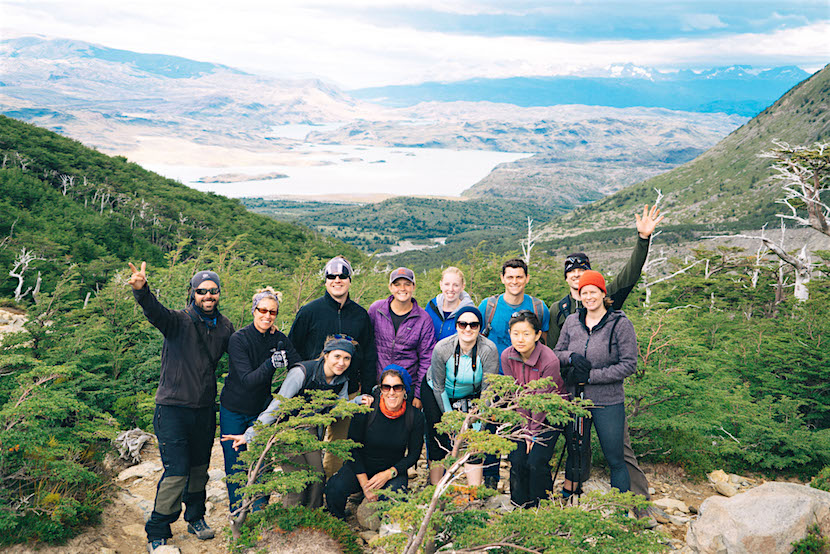
Even though I am an independent traveler, I find group tours super fun, a great way to meet people, learn more from an informed guide, go to places you normally can’t, and wet your feet in travel. My first trip overseas was on an organized tour. I didn’t know the first thing about travel and that tour gave me the confidence to travel on my own. It was the taste test I needed to become hooked on travel. Tours give a lot of people time to adjust to the “travel lifestyle.”
Unlike in the past, today’s tours are eco-friendly, cater to all travel styles, over cheap, and make a point to use local transportation and guides. And many destinations (like Halong Bay, the Galápagos Islands, the Serengeti, Machu Picchu, Antarctica, Everest) are virtually inaccessible without an organized group tour!
1. Research the costs
With tour companies, it’s not always true that you get what you pay for. Many tour companies nickel-and-dime you, while some are really good at maximizing value for your every penny. Ask how your money is spent to find out if you are really getting the best value for your money. How much of your fee is their overhead? Are you paying for top-notch hotels but staying in two-star guesthouses? You want a company that is transparent with why prices are the way they are. Moreover, make sure you ask if there are added fees to pay when arrive. Many companies require you to pay additional money when the tour starts or don’t include park or attraction entrance fees. That cheap tour won’t be so cheap if you have to pay for everything while you’re there!
2. Make sure you are the audience
Is the tour geared toward older couples? Young people? Families? You don’t want to end up on a loud Contiki tour full of drunk twenty-year-olds when all you want is a quiet holiday.
There’s a tour company for everyone — just make sure you don’t end up on one that isn’t yours. Most tour companies list their guest demographics on their “About” page, and you can usually see from the photos of their tours who goes on it.
ou can also tell the audience based on accommodation: if it’s hostels or guesthouses, it’s usually for backpackers and budget travelers; if it’s fancy digs, it’s for older travelers and families.
This is very important because these are the people you’ll be traveling with so you want to make sure it’s the kind of people you are traveling with. I’m still friends with the people from my first tour in 2003 because they were people like me. The tour in Japan that was filled with older families? Not so much. We didn’t have much in common. Wonderful people but we didn’t connect.
So, I always look for tours that have my demographic in them.
3. Get local guides
Guides can make or break your trip. They are going to explain everything to you and keep the flow of the tour going. I don’t want them hiring some young kid, non-expert, or someone who doesn’t know the place well. I’ve been on tours where the guide was a walking encyclopedia, and on somewhere the guide was a glorified timekeeper.
Make sure the company uses knowledgeable, local guides. The guide should be a local or at least a long-term resident, know the local language, have travel experience, and know life-saving techniques.
If you are unsure about the guides, call the customer service line and ask them about their guides.
4. Safety record
Make sure the company follows all the proper safety requirements and is accredited by the local government, the government where they are registered, and any other appropriate trade organizations.
5. A balanced schedule
You’re paying for them to fill most of your day. How do they do that? Are they doing that? Do they have a lot of activities organized, or do they leave you to your own devices?
That said, you don’t want a schedule that is crammed with things to do. Make sure you get a schedule of all the activities and pick a tour that is balanced. Running around will leave you wishing you had a holiday from your holiday, but you don’t want to be sitting around all day, either.I love taking small group tours because they generally have a good balance. Any tour that requires you to be on a huge bus and hits 6 cities in 5 days is not a tour to take!
6. Environmental impact
There’s a growing trend among travelers called ecotourism. It’s about more responsible travel, not only toward the environment but also toward the locals in an area. This means using local guides, hotels, and services, and making sure to reduce waste and your footprint on the local habitat.
Moreover, these companies tend to offer better and more interactive tours that also give you a good degree of autonomy.
I think it’s important to pick a company that provides great value and gives back to the place you are visiting. After all, did you go there to ruin it for others? Doubtful.
Check with groups like the International Ecotourism Society for a list of companies that have been certified “eco-friendly.” With so much money pouring into the industry now, you have a lot of companies fraudulently saying they practice ecotourism but end up being involved in terrible labor practices, animal abuse, and waste.
7. Group size
Tour companies that have smaller groups tend to be much more mindful of the environment and the impact they are leaving. It’s a lot easier to meet people in a group of 10-15 than it is in a group of 60. I don’t like to go on tours with more than 15 people on them. However, I have friends who love Contiki tours with 40-50 people. Know what you are getting yourself into, so you don’t find yourself with a group too small or too large for your tastes.
Just remember larger groups tend to stay at bigger, more impersonal accommodations (they can only accommodate the numbers), eat at more touristy restaurants, and tend to travel to more destinations quicker.In my expert opinion, small group tours are the best.
8. Check their reputation
How have other travelers enjoyed their time? Look for online reviews to see what a company’s reputation is. It might not always be what they claim, and it’s important to find out the truth before you book.
Remember that MOST people only write a review if something goes wrong. Someone might give a tour company one star just because their eggs were runny. Find the average. Someone might hate a tour because the weather was hot. Seriously. These are actual negative reviews from the tour operator company,
“On my holiday to Goa in India, I was disgusted to find that almost every restaurant served curry. I don’t like spicy food.”
“We went on holiday to Spain and had a problem with the taxi drivers as they were all Spanish.”
“We booked an excursion to a water park but no-one told us we had to bring our own swimsuits and towels. We assumed it would be included in the price.”
“No-one told us there would be fish in the water. The children were scared.”
“Although the brochure said that there was a fully equipped kitchen, there was no egg-slicer in the drawers.”
9. Here are some key details about a tour company itinerary that you should note:
1. Destination and Duration:
- Clearly specify the destination and duration of the tour. This will help travelers understand the scope of the trip and make informed decisions.
2. Transportation and Accommodation:
- Outline the transportation arrangements for the tour, including flights, trains, buses, or any other modes of travel.
- Provide details about the accommodation, including hotel names, check-in/check-out times, and room types.
3. Day-to-Day Schedule:
- Create a detailed day-to-day schedule that outlines the activities, attractions, and sightseeing opportunities planned for each day of the tour.
- Include the estimated timings for each activity, transportation, and meals to give travelers a clear understanding of the itinerary's flow.
4. Meals and Inclusions:
- Specify whether meals are included in the tour package or if travelers will need to make their own arrangements.
- Clearly list all the inclusions and exclusions of the tour package to avoid any confusion or misunderstandings.
5. Contact Information and Emergency Procedures:
- Provide contact information for the tour operator, local guides, and emergency services.
- Outline the emergency procedures to be followed in case of any unforeseen circumstances.
6. Cancellation and Refund Policy:
- Clearly state the cancellation and refund policy of the tour company.
- Inform travelers about the cancellation deadlines and any applicable charges.
7. Additional Notes and Considerations:
- Include any additional notes or considerations that are specific to the tour, such as visa requirements, dress codes, or cultural sensitivities.
- Provide tips for packing, currency exchange, and local customs to enhance the traveler's experience.
By providing these essential details in a clear and organized manner, tour companies can ensure that travelers are well-informed and prepared for their
Travel Phography Tips
Framing, Framing and More Framing
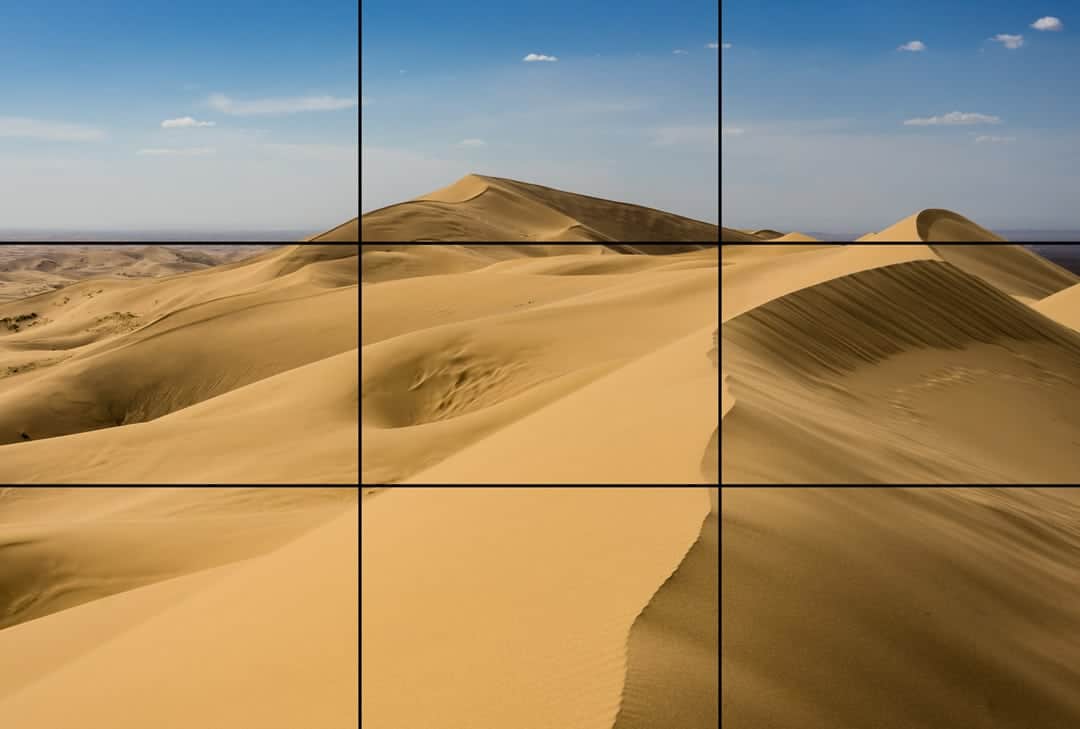
Table of Contents
- General Travel Photography Tips for Beginners
- Technical Travel Photography Tips
1) Know Your Camera
Whether you shoot on a dSLR, mirrorless, smartphone or an old film unit, the first travel photography tip is to get to know your camera equipment.
Whatever you have in your camera bag, take the time to read the instructions, play around with all the buttons and camera settings, and spend hours with it in your hand so that it becomes a part of you.
Study the menu so that if you need to change camera settings in the field you’re not spending minutes scrolling through it when timing is critical.
Also don’t forget to learn your camera’s limitations.
Does it perform well in low-light or does the image fall apart? Is it sharp wide open, or do you need to stop down to get the best clarity? Does it have inbuilt image stabilisation?
Ultimately when you pick up your camera you want to feel comfortable and know exactly how it works. Then getting better pictures will come faster and easier.
2) Focus on the Golden and Blue Hours
Light is everything when it comes to travel photography images, and there’s a good chance you’ve already heard about the golden and blue hours.The Golden Hour is that time when the sun is low in the sky and it throws a magical, warm glow across the scene.
Think the first hour after the sun peaks in the morning, and the last hour or two before the sun drops over the horizon in the afternoon.
The Blue Hour is when the sun is below the horizon and the sky gives off a beautiful blue hue.
If you really want better travel photos, one of the best travel photography tips we can give is to get used to waking up early and stay out late to make the most of these two times of day.
If you’re not a morning person, get used to setting an alarm. Many of the great travel photos of the Taj Mahal and other tourist sites with no one in them for example were taken by people who got there early.
Taking photos in the middle of the day can still result in great shots, but in general you’ll find the blue sky too blown out unless there are some interesting clouds, and on a sunny day you’ll find the lighting conditions can be a bit harsh.
Instead use the middle of the day to get street photography, or scout out photo locations and a vantage point for your sunrise and sunset photos to come back later.
Bonus Tip – Even if it looks like the sunrise or sunset might not be so beautiful, wait around. You never know when the clouds might break or the sky randomly lights up in brilliant colours.
3) Plan Your Shots
Before you arrive in your tourist destinations, spend a few hours planning out your shot list of images you want to photograph.
You can get inspiration from Instagram, Google Maps, travel guides, magazines and more.
Make a note of these pictures, and then plan your day around the optimum time to shoot (sunrise or sunset for example).
Doing this will help you nail the shots you want to go, and give you more purpose and direction.
You need to know that all of the best photographers use tools like Google Maps or social media to form a shot list, and you should get used to it too.
4) Learn About Composition
You’ve probably heard about how important it is to compose a shot properly, and I bet if you’ve ever read a photography manual you would have come across the ‘rule of thirds‘.
Good composition can be the difference between an average shot and award-winning travel photos.
There’s all kinds of ‘rules’ that theoretically make a photo look nicer, such as not putting your subject in the middle of the shot, don’t cut elements out of the frame, etc.
But right now let’s go a bit into the Rule of Thirds.
This concept is where you divide your image into 9 even squares (many cameras actually have this grid line feature built into their display options).
Then what you do is you place the subjects and points of interest such as a human element along those lines and squares.
The idea of the rule of thirds is that this is a mathematical idea of what our eyes naturally find pleasing. So it’s good practice to incorporate this method into your shots.
Another thing to look for is leading lines that naturally draw your eye around the photo, as well as different angles and shapes.
Have a river flowing from the side of the shot up to a waterfall on the top left for example, or the foreground bending around, leading the eye towards a church at the top of the photo.
This is a skill that you’ll learn with more practice.
An important thing to remember is that rules are meant to be broken.
Get used to analysing your shots with the rule of thirds, but please don’t use it as gospel if you think a different composition would work.
Adding a human element also brings a lot of interest to a good shot, so place people in your frame.
5) Framing, Framing and More Framing
When you look through the viewfinder or LCD screen, don’t just focus on the subject.
Make sure you run your eyes around the entire frame to make sure you’re not accidentally cutting off something important.
Double-check that the top of a mountain is fully inside the frame, or that your friend’s whole body is in the shot as an example.
This isn’t gospel, because sometimes having something cut off from the frame can be good for composition, but you’ll have to be the judge of that.
Also check to see if you can use something natural in the scene to create a frame inside your picture.
Think of looking out a window at a building, or a bent-over tree surrounding a pretty lake.
These can all help make better travel photos.
6) Move Your Feet
This is one of the most important travel photography tips I can give – Move your feet.
Don’t just arrive to a scene and take a shot from the place you’re standing.
Instead take a few minutes to walk around and see if there is a better frame or composition.
Go closer, move back, step to the side, consider your lens’ focal length, etc.
Imagine trying to take that iconic Taj Mahal photo, only to find out later that you were 2m to the left of centre, throwing off that perfect symmetry.
Or maybe if you walk to the river’s edge you’ll be able to incorporate some interesting rocks into the scene instead of just water.
Better yet, take multiple travel photos and fill up those memory cards from the same photo locations so you have lots of options when you get home to see which is your favourite.
7) Ask People for Permission
Travel photography isn’t all about capturing the most beautiful sunsets and gorgeous architecture around the world.
Travel photography is also about the people you meet. But if you’re a bit shy like me, how do you get those amazing portrait photos without feeling rude?
Simple – just ask for permission.
Asking someone for permission to take their photo is polite and respectful.
If you have had a great encounter with someone, or you just see a great opportunity and want to capture a wonderful portrait, give them a big smile and ask if it’s ok to take their photo.
You’ll find many people are more than happy to pose for a photo if you just ask (just make sure you respect them if they say no).But what if you want to get a candid shot, with the subject looking natural?
There’s always another way to get these without annoying the person.
Don’t make it obvious that you are taking their photo. Act natural and take lots of photos of the environment around them.
You can also keep your camera down by your side and point the lens in their direction.
If you have a zoom lens, use it. This was you can be on the other side of the street or market and still photograph the person.
Make Them Feel Comfortable
Another one of my favourite travel photography tips for portraits is to bring in another element to the shot.
Some people will feel uncomfortable posing for a stranger, but if you can make it about something else they will feel much more at ease.
As an example, maybe ask if they can pose with something in their store like a rug, or ask them to show you their wedding ring.
This way they’ll realise there is more to your photo than just them. This will also add a lot more interesting elements to the shot!
8) Use a Tripod
A tripod is one of the best camera accessories you can have in your camera bag, and really essential for travel photography.
This will allow you to get excellent shots in low light, as well as get creative with your images (like taking long exposures).
These days you don’t always need a massive tripod to travel around with, especially if you want to travel light and are a hobbyist photographer. Look at some of the Joby Gorillapods.
Another good thing about using a tripod is that it will force you to slow down with your photography and put more thought into each shot.
Rather than just pointing and shooting, you will think carefully about where you want to set up your tripod and how you want to compose your shot.
Honestly if you want to become a better travel photographer, you’ll need to invest in at least a small tripod.
9) Find the Right Travel Photography Gear
You don’t need to go out and spend tens of thousands of dollars on new travel photography gear to get the best shots.
In fact chances are you already have a perfectly adequate camera right next to you (your phone).
Instead just get what you an afford, and as you grow with your photography style, post production, etc, you’ll learn what camera gear you need as well.Things like filters, tripods, flashes, prime lenses, zoom lenses, etc will come in time.For now, all you really need is a camera, memory card and enthusiasm!Check out our recommendations for the best travel tripods.
10) Be Unique
There’s nothing wrong with getting those iconic shots of the Eiffel Tower or Machu Picchu to share on social media.
They’re beautiful and are often amazing camera angles of famous places that everyone wants to visit.
But don’t forget to be unique as well! Find a different perspective that hasn’t been photographed a million times.In fact make it your goal to get a few unique shots that you can be proud of. Over-expose, under-expose, incorporate motion blue – the only limitation is your imagination!
11) Find Your Voice as a Photographer
Just like a writer or musician finds a particular style they like, as a photographer you need to discover your ‘voice’.
Travel photography is such a broad term that can cover just about anything.
Really just taking any travel photos will fit the description, whether it is landscape photography, wildlife photography, architecture, portraits, food or whatever.
Just find a style you love most, and focus on getting better at it.
If you really like black and white photography, then start shooting in black and white! Love taking images of crazy street markets? Then get out there and find them!Experiment, learn, discover and nurture!
Technical Travel Photography Tips
While the technical side of using a camera is usually the most overwhelming thing for a new photographer to think about, it’s actually one of the easiest things to master. All it takes is a bit of study and practice.If you’ve never looked into getting out of ‘Auto mode’ on your camera, then terms like ISO, aperture, white balance and shutter speed will seem completely foreign.
12) Exposure Triangle of Photography
The Exposure Triangle is a metaphor to explain the 3 elements that allow light onto a sensor.
A camera captures light, and the right amount is needed so that your image isn’t too bright or too dark.
The 3 parts of the Exposure Triangle are aperture, ISO and shutter.
Each one affects how light reaches the sensor in different ways, and getting this combination right is essential to capturing a beautiful image.
13) Aperture
Aperture is how wide, or small, the blades in your lens are and how much light goes through the lens.
The aperture size is measured in ‘F Stops’, and displayed as numbers. f5.6, f8, f11, f16, etc
A wide aperture (small number – f1.8) lets in more light than a low aperture (big number – f22).
A wide aperture also has a shallowed depth of field than a low aperture. I know it can be a little confusing, but you’ll pick it up the more you play around with it.
If you want the background blurry in your photo, you’ll want a wide aperture. If you want everything in focus, you’ll want a low aperture.
14) ISO
ISO is how sensitive your camera sensor is to light. A small number, such as 100, means it’s not very sensitive and therefore needs more light to leave an impression.
A high number, like 6400, means it’s very sensitive and needs only a little bit of light to show up on the sensor.
The higher the ISO, the more noise shows up in a photo. Noise lowers the quality of your image, so in a perfect world you’ll want to keep this as low as possible (unless you’re going to stay out late doing astro and night photography).
It’s also necessary to raise your ISO if you’re shooting moving subjects (or handheld) indoors.
15) Shutter Speed
Shutter speed is pretty straight forward – how long it takes for your shutter to open and close. This allows you to freeze a frame, or introduce motion blur.
Want to capture a bird in flight? You’ll want to have a fast shutter (1/4000th of a second for example).
Want to make a waterfall look silky smooth, like you see in so much Iceland photography? Go for slow shutter speeds (3 seconds for example), and check out our guide to waterfall photography tips while you’re at it!
Keep in mind that if you are holding your camera equipment rather than using a tripod, you’ll need to have a fast enough shutter to eliminate your own hand movement.As a general rule 1/60 of a second is the slowest you should go so your picture doesn’t pick up hand movement. Any slower than that and you’ll probably need a tripod.
16) Combining All Three for Perfect Exposure
There is no ‘perfect setting’ for aperture, ISO and shutter. It all depends on what you are trying to photograph and the style you’re going for.
Luckily most decent digital cameras have two little tools that will let you play around figure out how all three work together – manual mode and histograms.
The best way to figure out what combinations work best when you’re a complete amateur is to put your camera on “manual” mode, activate the histogram, and play around with the settings.
Pick an aperture (f/8 for example) and point it at the scene. Now look at the histogram.
If the image is too dark, then you’ll need to let more light in. Let’s make the speed slower. See a change?
Manual gives you complete control over your camera’s ISO, aperture and shutter.
If you change one, nothing else will change, unlike in ‘aperture priority’ mode or ‘shutter priority’ mode.
The histogram is a visual display of light. When the bars are all the way to the left, the image is darker. When they are all the way to the right, the image is lighter.
Now put the shutter back to where it was and instead change the ISO. Make the ISO higher. Is the image getting lighter?
Spend an hour or two playing around with different apertures, ISO and shutter so you get an idea of how each one affects the light hitting the display.
Take note at how drastically things can change if a cloud goes in front of the sun, or you take the camera inside.
This just comes with practice of course, and knowing what settings you want for a particular scene will become second natureKeep in mind that not all travel photos needs to be perfectly exposed. Sometimes having a darker image looks much better than having one that is nice and bright. You can use your judgement for this.
17) Bonus – General Ideas For Camera Equipment Settings
This is very, very basic and by no means should be read as gospel. There are a million different things that can affect why you would want a faster shutter, or wider aperture. But if you are confused about what to pick for what here’s a quick idea.
- Landscapes – You’ll want your aperture around f8-f11. You’ll also want your ISO as low as possible. Slow down the shutter accordingly.
- Portraits – You’ll probably want to photograph your subject to be sharp, but the background blurry to bring focus on the person. Have a wider aperture (say f2.8 for example), and a faster shutter (around 1/160 at the absolute slowest) to freeze the subject. Adjust ISO accordingly.
- Indoors – Because it is darker inside than outside, you’ll need to let a lot more light into the sensor. Unless you’re using a tripod, keep the speed at around 1/60 as the slowest, and the aperture around f5.6 to start with. Adjust ISO and aperture accordingly.
Of course there’s a bunch of other styles of travel photography that would use different settings, such as astrophotography, architecture, street scenes photography, wildlife photography, etc.
In time you’ll learn what settings work best for each scene.
-
18) Use Manual Mode
The best way to get to know your camera and how light works is to have complete control over what settings you choose.
The only way to do this is to shoot in manual mode (shown by the letter M on most cameras).
It will take months of practice, but I promise you that in time you’ll be able to look at a scene and instantly know what aperture, ISO and shutter to use to get the exact style of image you’re looking for.
You can also use aperture priority mode (the letter A on your camera) if you don’t want to make the big leap to manual just yet.
This way you can lock in the aperture you want (f8 for landscape photography, f2.8 for portraits, etc) and the camera will automatically adjust the ISO (although you can control this part too) and shutter to get perfect exposure.
I highly recommend focusing on learning manual settings though until you have it perfected.
-
19) Shoot in RAW (if available)
When you take a photo on your digital camera, the computer chip inside it takes what you captured on the sensor and converts it into a format that can be easily read. For most cameras, these two formats are RAW and JPEG.
JPEG is a compressed format that the camera creates to save on space. In doing so it ‘locks in’ all the data that it picked up such as the colour and white balance.
RAW files actually saves all the data of what you took and doesn’t compress it.
Most decent digital cameras will give you the menu option of shooting in RAW, and I recommend you use it if you ever plan on editing your photos.
Keep in mind that the file sizes will be a lot bigger (for example on one of our cameras a RAW is 42, while a JPEG is just 20), so you’ll need to have extra memory cards and external hard drive storage.If you have no plans on editing your photos then shoot in JPEG.
-
20) Learn About Post Processing
Some people think that editing your photo is ‘cheating’. But the truth is photographers have been editing their photos ever since photography was invented.
Yes, even your favourite photos in National Geographic have been manipulated in some way.
99% of photos you see in your favourite travel magazines have been edited. Every professional photographer edits their photos to some degree.
The reason is that not all cameras are great at capturing exactly what the eye saw in terms of colour and light.
If you really want to get the most out of your professional travel photography business, you should start playing around with post processing.
Many people have heard of Adobe Photoshop, but it’s a pretty advanced tool that most people wouldn’t ever need to use (until you get more experience).
To start with look at the free apps that you can get on your phone, such as Snapseed, or free editing programs on your computer, like iPhoto or GIMP.
Once you get serious about travel photography and you want to start editing all of your photos that are filling up your memory cards and external hard drive, we recommend purchasing Adobe Lightroom.
-
21) Practice, Practice, Practice
Just like anything, becoming a great travel photographer takes time, and a lot of practice. The only way you can get better is by getting out there taking travel photos!
You don’t even have to travel the world to tourist destinations or have the most travel camera available to be a great photographer.
Borrow some family members to take their portraits, get a friend who is also interested in photography and push each other, or grab your smartphone and go shoot sunset.
Buy whatever you can afford, go for a walk around your city and snap away.
We hope that this general guide on travel photography tips for beginners has been helpful.
Please feel free to reach out to us if you have any other questions. We have a lot of experience working with tourism boards, and would be happy to help you too.
Good luck on your photographic journey, and maybe we’ll see you in National Geographic one day!
Modern Travel Style
There are many different types of travel styles, each with its own unique appeal. Here are some of the most common:
Luxury Travel: Luxury travelers are looking for the ultimate in comfort and pampering. They often stay in high-end hotels, dine at Michelin-starred restaurants, and enjoy personalized service.
Adventure Travel: Adventure travelers are seeking out new and exciting experiences. They may go hiking, rock climbing, white-water rafting, or explore remote destinations.
Budget Travel: Budget travelers are looking to save money while still having a great time. They may stay in hostels, eat at local restaurants, and travel by public transportation.
Slow Travel: Slow travelers are looking to immerse themselves in a destination and experience it at a leisurely pace. They may spend weeks or even months in one place, exploring the local culture, food, and customs.
Culinary Travel: Culinary travelers are passionate about food and wine. They may take cooking classes, go on food tours, or visit wineries and vineyards.
Ecotourism: Ecotourism is a form of responsible travel that focuses on minimizing the negative impact on the environment and supporting local communities. Ecotourists may stay in eco-lodges, participate in conservation projects, or visit national parks and wildlife refuges.
Voluntourism: Voluntourism combines travel with volunteering. Voluntourists may work on a variety of projects, such as teaching, building schools, or helping to protect endangered animals.
Digital Nomad Travel: Digital nomads are location-independent professionals who work remotely and travel the world. They often stay in co-working spaces or long-term rentals and use technology to stay connected while on the go.
Solo Travel: Solo travelers are people who travel on their own. They may enjoy the freedom and independence of solo travel, and they often find it to be a rewarding and enriching experience.
These are just a few of the many different types of travel styles. The best travel style for you will depend on your personal interests, budget, and travel goals.
Here are some additional factors to consider when choosing a travel style:
- Your personality: Are you outgoing and adventurous, or do you prefer to relax and take things easy?
- Your interests: What are you passionate about? Do you enjoy exploring new cultures, trying new foods, or experiencing nature?
- Your budget: How much money do you have to spend on travel?
- Your time frame: How much time do you have to travel?
Once you've considered these factors, you can start to narrow down your options and find a travel style that's perfect for you.
No matter what your travel style, there's a whole world out there waiting to be explored. So get out there and start planning your next adventure!
Here are some of the hippest news in the travel and tour industry this month:
- Luxury travel is back in vogue. After a few years of uncertainty and economic downturn, luxury travel is making a comeback. Wealthy travelers are once again splurging on extravagant vacations, and travel brands are responding with new and innovative offerings. For example, several luxury hotels have opened in recent months, including the Ritz-Carlton Reserve Dorado Beach in Puerto Rico and the Aman Kyoto in Japan.
More people are traveling for longer periods of time. Travelers are increasingly taking longer vacations, with many people opting for "workcations" or "bleisure" trips that combine work and leisure. This trend is being driven by a number of factors, including the rise of remote work and the desire to experience new cultures and immerse themselves in different destinations.
-
Sustainable travel is a top priority. Sustainability is becoming increasingly important to travelers, who are looking for ways to reduce their environmental impact while traveling. Travel brands are responding to this demand by offering a variety of sustainable travel options, such as eco-friendly accommodations, carbon offset programs, and tours that focus on responsible tourism.
-
Wellness travel is booming. Wellness travel is on the rise, as travelers are increasingly looking for ways to improve their physical and mental health while on vacation. This trend is being driven by the growing popularity of yoga, meditation, and other mindful practices. Travel brands are responding to this demand by offering a variety of wellness travel packages, such as retreats, detox programs, and spa getaways.
-
Experiential travel is in high demand. Travelers are increasingly seeking out experiences that will immerse them in different cultures and allow them to learn new things. This trend is being driven by the rise of social media, which has made it easier for travelers to discover and share unique and authentic experiences. Travel brands are responding to this demand by offering a variety of experiential travel packages, such as cooking classes, food tours, and volunteer opportunities.
-
Solo travel is on the rise. Solo travel is becoming increasingly popular, as more and more people are choosing to travel alone. This trend is being driven by a number of factors, including the rise of independent travel, the desire for personal growth, and the increasing affordability of solo travel. Solo travelers are often looking for unique and authentic experiences, and they are not afraid to go off the beaten path.
-
Digital nomads are redefining the travel industry. Digital nomads are a growing group of people who work remotely and travel the world. They are often location-independent and they use technology to stay connected while on the go. Digital nomads are having a significant impact on the travel industry, as they are creating a demand for new and innovative accommodation options, such as co-working spaces and long-term stays.
-
Social media is influencing travel decisions. Social media is playing an increasingly important role in influencing travel decisions. Travelers are increasingly using social media to research destinations, find inspiration, and share their travel experiences. Travel brands are responding to this trend by creating engaging social media content and using social media marketing to reach new customers.
A Briliant Tour Itinerary
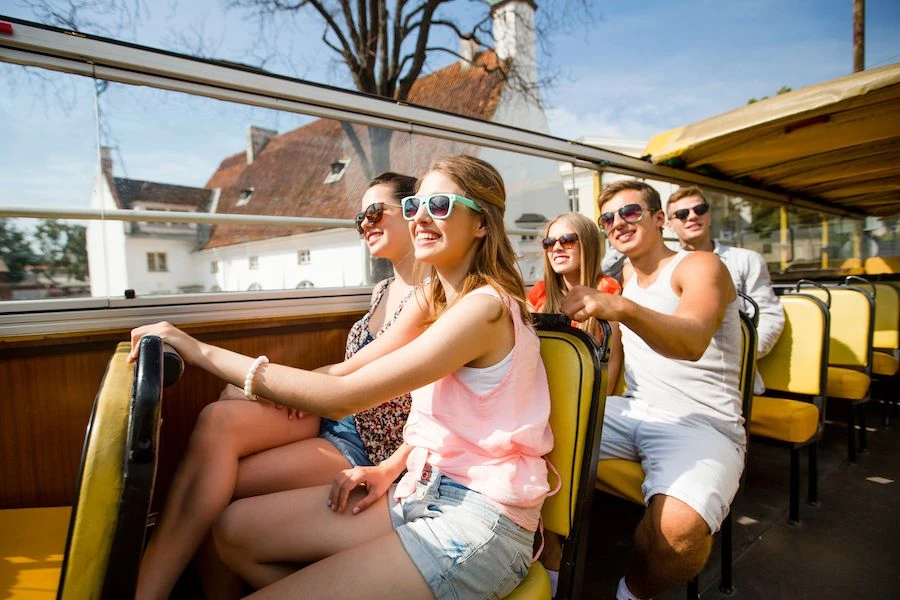
What is a tour itinerary?
A tour itinerary acts as a roadmap for your future guests. It tells them what they’ll be doing and seeing should they opt to book your tour. Plus, it outlines arrival time(s), frequency and duration for each tour.
Before you begin laying the groundwork for your tour, see what some of your competitors are offering. Grab a few brochures to explore details, highlights and overall tour structure.
For guests, part of the draw of booking with a tour operator is having a pre-planned itinerary. This means travellers can simply show up and enjoy the tour.
Picture yourself in a potential guest’s shoes. They’re looking at different tour options, trying to decide what activity and where to book. A detailed tour itinerary simplifies the booking experience for prospective visitors and can be a powerful marketing tactic in motivating these visitors to book your tour.
So, right in your tour introduction, describe the experience to travelers as if they were on the phone or standing in front of you. To sound approachable and lighthearted, try speaking your tour itinerary description aloud. There are many components you’ll need to factor into your itinerary and we’ll dive into those next
Components of itinerary in tourism
Let’s say you’re evaluating whether to offer one type of tour or a range of options, try to imagine what we will be curious about. It’s important to determine how much I can fit into the tour’s duration without pushing the timeframe.
The guests are seeking experiences that will immerse them in the local culture and foods. As a tour guide, this is an amazing opportunity to showcase off-the-beaten-path locations and experiences designed to provide guests with an authentic experience.
In your tour description, included details that customers might ask about so they can self-screen instead of booking a tour that isn’t quite right for them. When working on drafting up an outline for your tour itinerary, make a note of what you want to lead with. For example:
- Is this tour suitable for kids?
- What type of weather can guests expect while on tour?
- Is there a certain type of experience or skill required to enjoy this tour?
- Will guests be able to take photographs on tour?
- Is a lot of walking involved on this tour?
- Do tours run frequently or are they only offered at a certain time?
A tour itinerary will look different depending on whether you offer hourly, single-day and multi-day experiences.
- Plan the route
Part of the fun of designing a tour is trying it out yourself to see if you’re enjoying the experience. There’s a saying I remember from 11th-grade math that runs along the lines of failing to prepare is preparing to fail. If you’re pouring energy into perfecting a tour itinerary on paper, you need to give it a dry run to see if your expectations match reality.
- Walk it out
So, consider doing a walk-through or inviting a few friends to join for the added benefit of another perspective. This will help fine-tune the details and assist with getting the timing down. And, as you grow more familiar with your tour, you might discover better ways to approach the route or plan out points of interest.
Common tour intinerary questions
- When will the tour(s) depart and return?
- What is the frequency of your tour?
- Where will the central meeting point be?
- Is accommodation be included in the tour?
- Do you offer transportation to and from the tour?
- Will extras be available on site or for purchase?
Then, in the next section, repeat important information like meeting locations and tour frequency along with whether pricing differs depending on the time or date of booking. Are guests required to book in advance or book private tours if they book four or more spots? Address all of the questions in your tour description and make it easy for guests to find out if yours is the right type of tour for them.
3 different types of itineraries in tourism
Imagine you’re evaluating whether to offer an hourly or full, single-day tour. To deliver on a promise, explore how much you can fit into your tour’s duration without pushing the timeframe.
1. Hourly
- Hourly tours can run anywhere from 1 – 4 hours, based on what you’re going to include in the tour
- Plan for an activity that doesn’t make guests feel rushed by including enough time to put on extra gear or listen to a safety briefing pre-tour
- While on a walking tour, make a point to visit few landmarks, while also allowing guests “free time” to take photos and understand the culture
- As a bonus, you’ll be able to stay on schedule and still accommodate time for your guests to take photos
2. Single Day Tour
- A single day tour might last anywhere from 4 to 8 hours
- Curate a schedule that accounts for buffer time
- Account for ample time for guests to take photos
- Clearly describe if/when any meals are included
- Structure sightseeing for when places are less busy
- Describe meeting locations and tour frequency
3. Multi-day Tours
- Determine accommodation options for groups
- Describe the type of transportation plus pick-up/drop-off locations
- Source suppliers for meals and restaurants
- Plan out transportation to and from each new location
- Factor in a few different activities to entertain different guests
The rise of multi-day tours
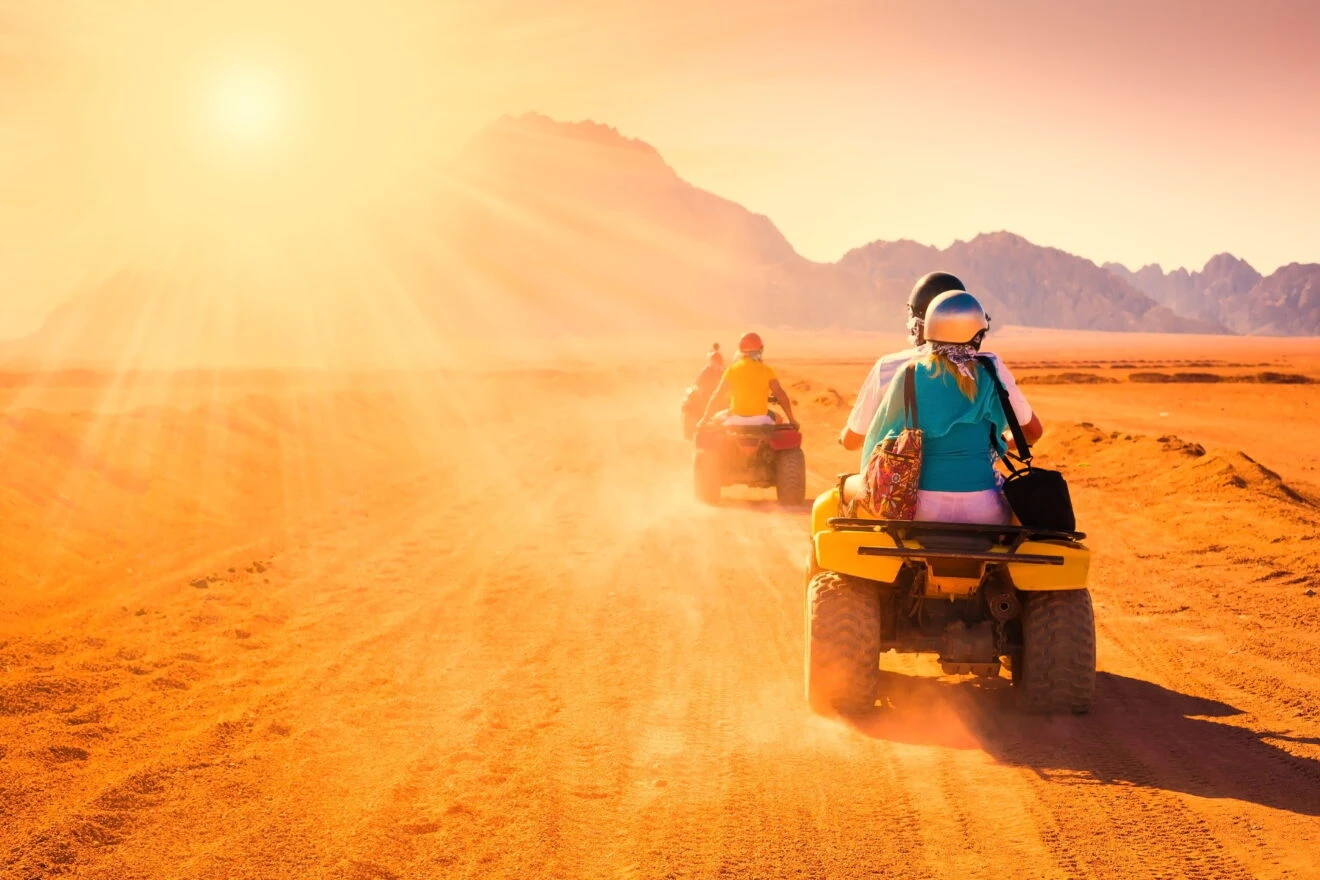
Multi-day tours are proving popular, but what are they and should you be getting in on the action?
According to a 2021 survey by Arival, there are about 10,000 tour operators in the worldwide multi-day tour market. Three in five are small businesses, and one in three are relatively young, having started operations in 2015 or later.
The most exciting part, though? Arival estimated these multi-day tour operators made US$89 billion in gross sales in 2019.
That’s a whole lot of action within a segment of the industry that both travellers and operators still have yet to fully grasp. All told, the multi-day market feels more than ripe for a deep dive.
Here’s everything you need to know about the rising travel industry trend of multi-day tours.
What is a multi-day tour?
On the surface, multi-day tours are what they sound like: tours that span longer than one day. But what these tours actually include can vary wildly. They can take place in one location or take guests through multiple destinations, activities, and attractions.
They could be highly specialized — focusing on a travel trend like culinary travel, wellness, or volunteering, for example — or combine things like adventure, sightseeing, food tours, and other activities into one multi-day experience.
Multi-day tours can be:
- Scheduled tours: These are pre-planned tours with fixed destinations and dates. Guests simply book to join, and the itinerary is already set and perhaps run by the tour operator a few times a year. For example, Spirit Bear Lodge.
- Customized tours: These are personalized experiences that use tour operator dynamic packaging to piece together multiple pre-set activities into one larger multi-day itinerary. For example, Eagle Wing Tours.
- Self-guided tours: They aren’t just one of the latest digital marketing trends; they’re also big in the multi-day tour market. These tours have a pre-planned itinerary, but guests are free to explore without a guide. They also may include accommodation, activities, and single-day experiences that guests can choose to add to their booking. For example, Church Farm, Ardeley.
They can look like anything from an adventure tour in Indonesia, complete with chartered boat, guided hike, and climb, to a multi-day bike tour, including overnight accommodation, of Iceland’s Ring Road. National park stays paired with activities, wine tour packages and multi-day bus tours are other common examples you may have even taken part in before.
What do multi-day tours include?
Every tour and tour operator is different, of course. But multi-day tours might include:
- A tour leader or guide
- Local or step-on guides to run select tours or activities
- Accommodation
- Food and drink
- Equipment rental
- Visits to national parks, attractions, or monuments
- Transportation
Why are multi-day tours so popular?
Pre-planned itineraries eliminate a lot of stress and admin for guests, but multi-day tours come with the added benefit of often being customizable.
Guests can “pick and mix” what they’d like included to craft a personalized tour. This way, they’re not paying for things they don’t want to do, and everything they do want to do is taken care of by a single tour operator.
Before their trip, guests don’t need to worry about booking individual tickets, and when they’re on vacation, there’s no need to juggle multiple reservations.
Multi-day tours sit at a higher price point than hourly or single-day tours, which is good news for tour operators, but guests are willing to pay the higher price tag to pack much more into their trip.
Because these tours include custom experiences that are hard to organize as a traveller, guests see the value in having options and tour operators are learning that variety sells. Offering hourly, single-day, and multi-day tours with plenty of optional extras are one way to meet the market.
What’s more, after the pandemic, travellers have begun seeking “meaningful travel,” which could include everything from bucket list experiences to reconnecting with family and friends or sustainable and responsible trips — another travel industry trend in itself. Multi-day tours are an easy and simple way to bring these meaningful trips to life.
Want to offer multi-day tours yourself?
If you already run a successful tourism business, multi-day tours could be your next step.
You’ll first need to decide if you’ll offer scheduled tours on set dates, organize customized tours and charters for guests, or develop self-guided options that span multiple days.
For example:
- If you specialize in one region, you could string together a multi-day itinerary that takes in several nearby attractions and activities.
- If you offer day tours around a national park, you could extend this to create three-day packages with more activity options, adding a kayaking day and a wildlife-spotting day to your popular single-day hiking tour.
- If you already offer different tours, activities, and rentals, you can learn how to create a tour package to combine these offerings into a multi-day experience.
Extending a one-day tour you already offer into a multi-day tour makes it easier to upsell, but you could also create a brand new multi-day itinerary from scratch.
What extras to include
Aside from your tour itinerary, you can consider whether you’d like to offer accommodation, food and drink, transport, or multiple activities as part of your multi-day package. You may want to partner with local vendors or businesses for this.
To hire or not to hire
Depending on the size of your business, you may need to hire tour directors who can manage groups over long periods of time, recruit step-on guides to take over short portions of the tour, and look into working with well-suited booking platforms or online travel agencies (OTAs) to help sell your new multi-day tours.
Technology and software make it easier
Get ahead of the competition by adopting the latest travel tech. The 2021 Arival survey found only 53% of multi-day tour operators used a tour reservation system. The rest used a mix of spreadsheets, email, itinerary builders, and OTA extranets to manage their businesses.
Using a tool like Checkfront, you can reduce the amount of admin you and your team need to do and make booking more accessible and streamlined for your guests.
Guests can book hourly, daily, nightly, or multi-day experiences with you, all through the same platform. So, whether you offer single-day tours, multi-day tours, activities, equipment rental, or accommodation — or all of the above — you have one tool that covers them all.
Multi-day tour providers can also use Checkfront to offer packages and automatic discounts when customers book more than one product with you and offer group discounts to encourage larger groups to book.
